Your money, your life, your plan.

One-on-one financial coaching by video, in English or Spanish. One of us builds the plan with you.

Book a free 15-minute call Ask a question, no name needed

Ask the money question you've been embarrassed to ask, no name needed. We reply privately by email, and publish it with our answer, anonymously, only if you say we may.

$289,000

in 25 years, from $100,000 put in

Growth added $189,000, more than you put in. In today's dollars, about $156,000.

We'd start with “What could you set aside every month, starting this month?”

How this is worked out

The same return every year, added once a year, with each month's deposit at the end of the month; no taxes or fees. Real returns go up and down: the full version shows the answer 2 points lower and higher, and lets you change how often growth is added, when deposits go in and whether they rise each year. Today's dollars take off 2.5% a year of inflation.

We'd start with “Which debt would you clear first, and how fast?”

How this is worked out

The minimum is the month's interest plus 1% of the balance, at least $25: a common rule, but yours may differ, so check your statement. It shrinks as the balance does; the second plan holds the payment steady, by default at the first month's minimum. A fixed APR, no fees and no new purchases. The full version plays both plans out, month by month.

We'd start with “How sure are you that you'll stay that long?”

How this is worked out

Assumes a 6.5% mortgage over 30 years; 3% of the price to buy and 6% to sell; property tax of 1.1%, insurance of 0.5% and upkeep of 1% of the home's value a year; mortgage insurance until you own 20%; and prices, rents and costs rising 3% a year. Invested money earns 7% a year before tax. No mortgage-interest deduction: most households take the standard deduction. Amounts are in the dollars of each year. Change any of it in the full version.

Sample figures; put in your own. An illustration, not financial advice. Nothing you type is stored or sent.

Who you'll talk to

We're Daniel and Jose, brothers and immigrants from Colombia. We're passionate about helping people optimize their personal finances and go after the life they want.

We created Centtavo because we know how valuable it is to master personal finances. From our own experience, we understand that mastering the basics of money gives you the tools and control to make better decisions. We want to guide you with a clear plan and structure so you can discover something essential: money is simply a tool, and when you learn to use it in your favor, the results are extraordinary.

When you book, you talk to one of us, and that's who coaches you.

Jose, smiling, in a blue checked shirt

Jose

Founder · Financial coach

I studied electrical engineering at Florida International University, and the most valuable thing it taught me was how to solve problems. Today I'm the purchasing director at a wholesale distributor.

I started my own financial journey in 2015. I've made plenty of mistakes since, and I've been lucky to learn from them. Money is personal: your plan might look a lot like mine or nothing like it, and that's the beauty of it.

What has kept me committed to my plan is being able to see it. I chose engineering because I like numbers: they're precise, they tell a story, and they don't lie. So we built a forecaster that's easy to use: put in your numbers, make a plan, and follow your results.

If you're ready to start, and you'd like a clearer path with one-on-one guidance along the way, I'd be glad to walk it with you.

Daniel, smiling, in a dark suit and white shirt

Daniel

Founder · Financial coach

I have a PhD in chemistry from Florida International University, and today I build AI tools at a large pharmaceutical company.

I'm the person who tracks spending down to the cent. Knowing where every dollar goes is what lets me invest it on purpose, in the stock market and in real estate.

Science taught me that you can't improve what you don't measure, and money works the same way. Once you can see it clearly, you can decide what it does.

If you want that kind of clarity, and a plan you'll actually follow, I'd love to build it with you.

Our digital tools

We believe in seeing where your money is headed, so we built tools that show you in a few clicks.

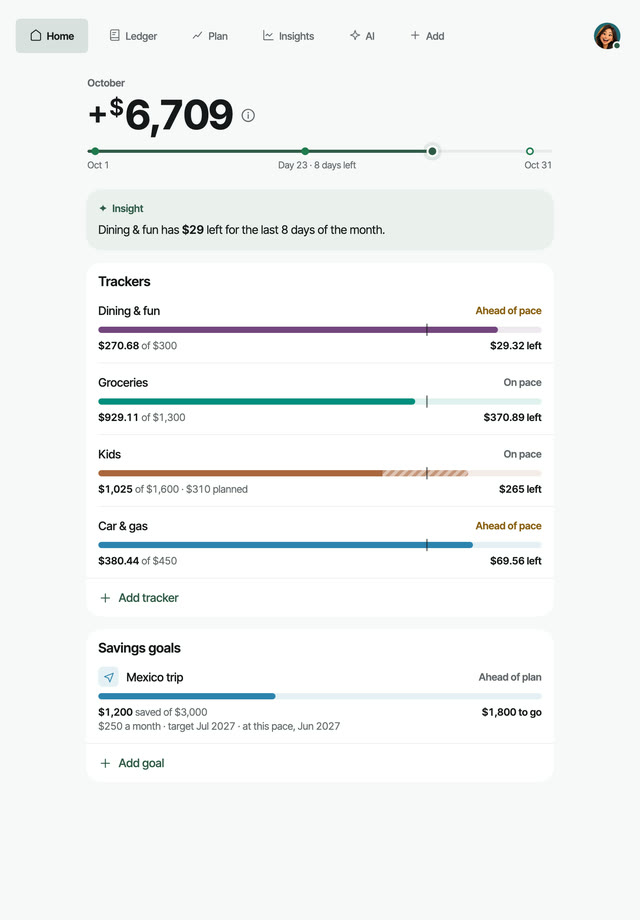
  1. Where the month stands

    See where the month is headed.

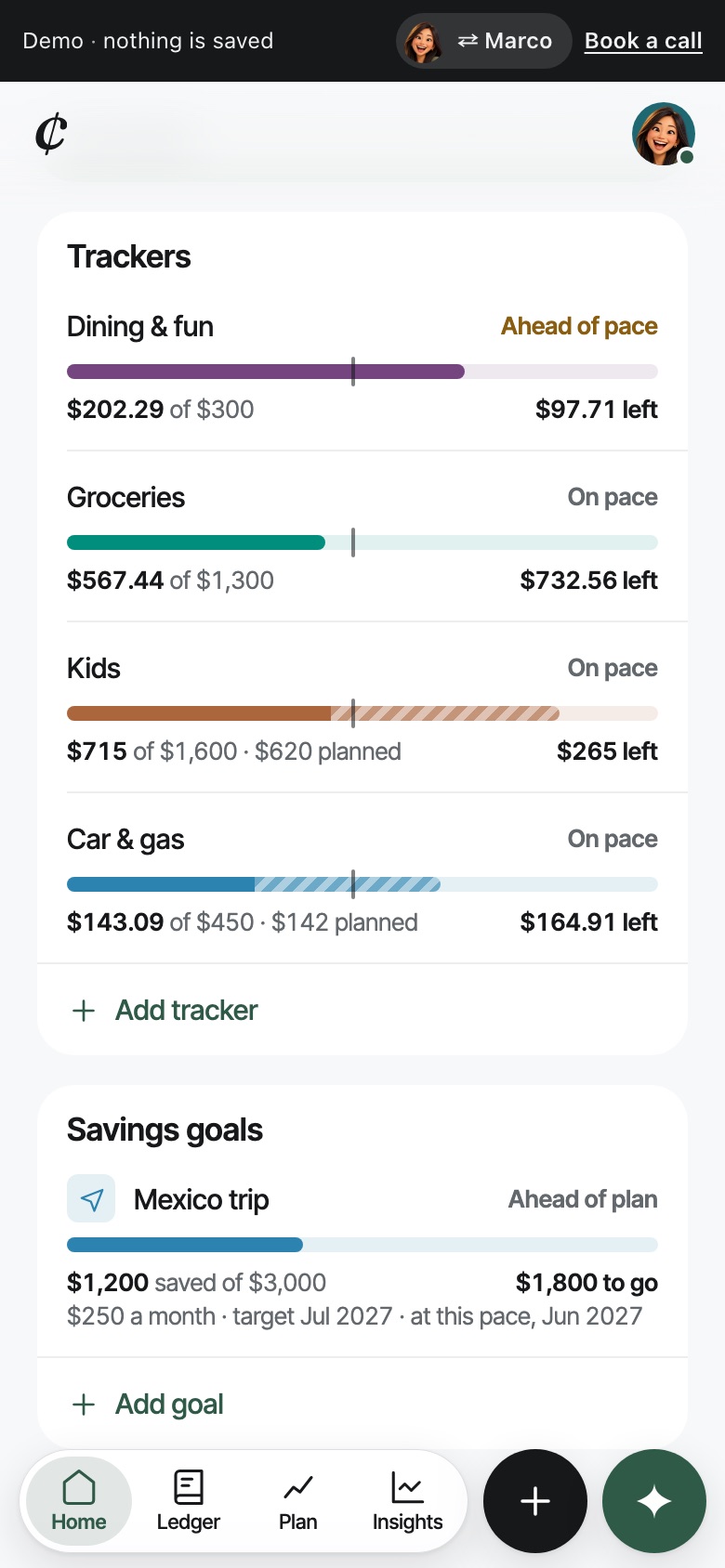
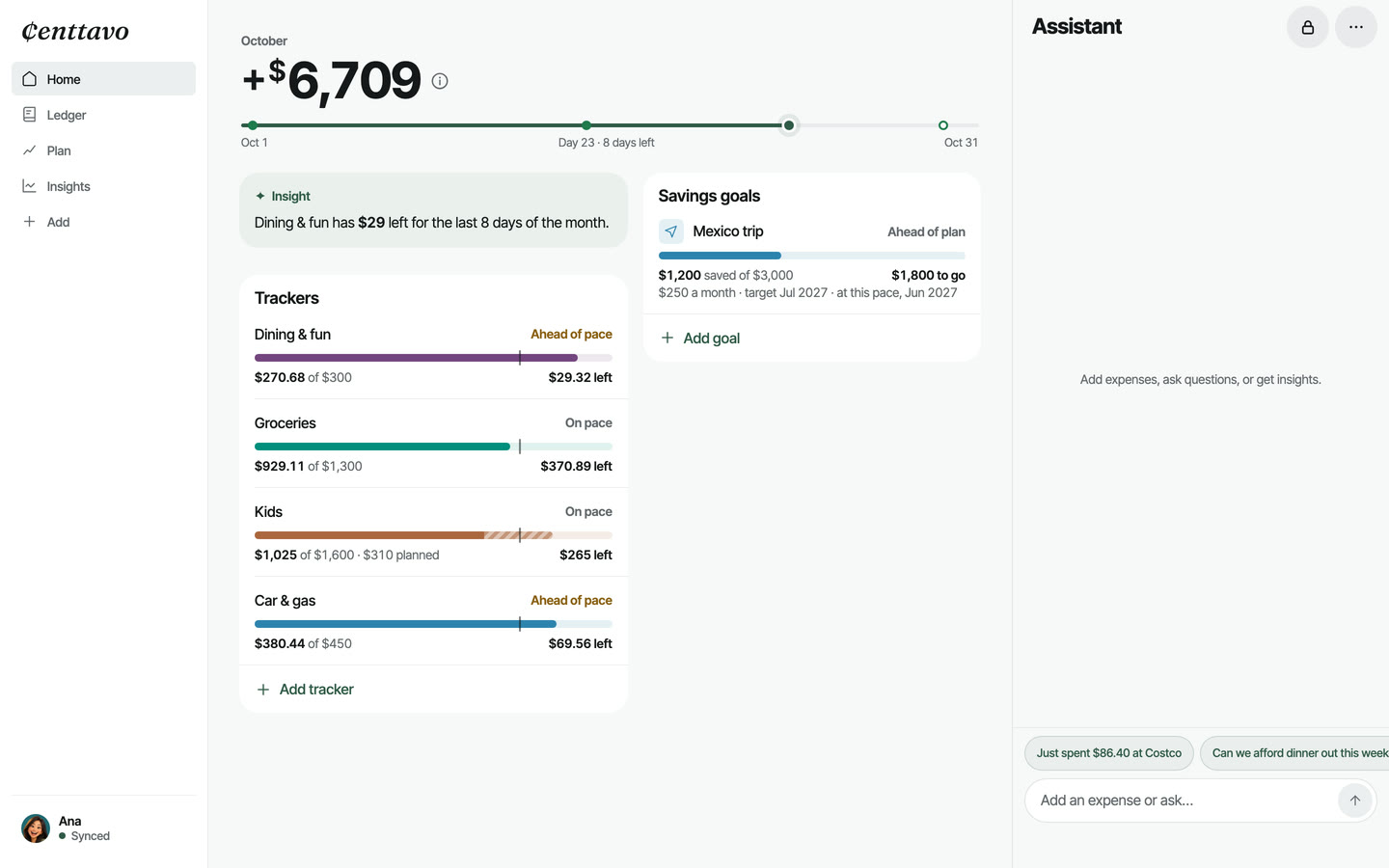
    Home shows what’s left in each tracker, and what to watch.

Real app · made-up household

Skip the demo

Live demo · click anything

The app's Home screen, with a made-up household

The app we coach in

Try it yourself

Every dollar gets a job before the month begins. Shared with a partner if you have one. No bank linking.

  1. Open the assistant ✦ and tap “Just spent $86.40 at Costco”.
  2. Tap “Can we afford dinner out this weekend?”
  3. Tap ⇄ Marco to see it as Marco.

Made-up household; nothing is saved. The app is in invite-only beta.

More tools

Net worth

$283,000

your net worth in 30 years, in today's dollars

Full forecaster

Card paid off in 4 years 2 months. $550 a month has no job. It isn't counted here: money without a plan tends to disappear.

We'd start with “Which of your dollars don't have a job yet?”

How this is worked out

Assumes 8% a year before inflation, 2.5% inflation, and amounts that rise with prices. The full forecaster adds a partner, retirement accounts and an employer match, and shows future dollars, what a statement would show.

Sample figures; put in your own. An illustration, not financial advice. Nothing you type is stored or sent.

Lease or buy a car

We'd start with “How long do you usually keep a car?”

How this is worked out

Each line is what driving has cost so far: every dollar paid, less what the car is worth when you're done. Assumes 36-month leases with $2,500 due at signing and a $395 return fee, each new lease 2% dearer a year; buying with $3,500 down and 6% sales tax and $800 in fees on a 5-year loan; a car that loses 20% of its value in year one and 15% a year after; and $800 a year of repairs once the 3-year warranty ends. Insurance, fuel and upkeep are left out: they're much the same either way. Change any of it in the full version.

Sample figures; put in your own. An illustration, not financial advice. Nothing you type is stored or sent.

How it starts

  1. A free 15-minute call

    Tell us what's going on and ask us anything. If coaching isn't the right fit, we'll say so.

  2. A detailed intake

    Before your first paid session, a form with rough numbers: income, expenses, debts, investments. Estimates are fine.

  3. Your plan, and a coach in your corner

    One coach, one-on-one. We build the plan with you, check in on it, push you when you need it and change it when life changes. Your discipline and your actions are where the real results come from.

Book a free 15-minute call

Book a free 15-minute call

Free, with one of us, by video, in English or Spanish. We'll tell you the price on the call, before you commit to anything.

Ask a money question

How we handle your question

Our answers are general education, not advice for your situation, and we can't recommend specific investments. Please leave out names, account numbers and anything that could identify you. We need your email to reply, so we can see who asked, but we'll never publish it. We publish a question only if you tick the box, and we remove identifying details first. Privacy

Net worth forecaster

Try the app

Compounding

Year by year

An illustration, not financial advice. Nothing you type is stored or sent.

What the minimum really costs

The minimum shrinks as the balance does, down to $25. The second plan holds the payment steady instead: by default, the first month's minimum.

Under this rule, with no new charges, $5,000 at 22% takes 19 years and 2 months to clear on the minimum, with $8,100 in interest. Holding the payment at $141.67 instead: 4 years and 10 months, with $3,121.

That's one card and one rule. A coach looks at the whole month with you.

Book a free 15-minute call

Assumes the minimum is the month's interest plus 1% of the balance, at least $25 (a common rule; yours may differ, so check your statement), a fixed APR, no fees and no new purchases. An illustration of the maths, not a statement about your card and not advice. Nothing you type here leaves the page.

Rent or buy

Year by year

An illustration, not financial advice. Nothing you type is stored or sent.

Lease or buy a car

Year by year

An illustration, not financial advice. Nothing you type is stored or sent.